Showing posts with label Holiday. Show all posts

29 January 2019

South Island Tour


Tell me about a complicated man.
Muse, tell me how he wandered and was lost
when he had wrecked the holy town of Troy,
and where he went, and who he met,
the pain he suffered in the storms at sea.
- Homer The Odyssey (modern translation)


The road to Mt Cook.


We have just returned from another epic Highstead adventure. Sixteen days of driving, tramping, and camping on the South Island. The trip was undertaken during the height of summer holidays and tourist season around here, so we designed our route to avoid the crowds as much as possible. In total, we covered a little over 3,400 km (2,100 mi), almost entirely on minor highways and roadways. A surprising amount of it was on unsealed/gravel roads. Along the way, we stayed in a mixture of small baches/cribs intermingled with a lot of tent camping. Despite the huge crowds out at this time of year, we felt like we had the roads mostly to ourselves.

Most people touring the South Island are a little limited in their choice of route. There are only a few places to pick up a hire car or campervan, and the most popular seems to be Christchurch. From there, the most common route is to head north and do a big anti-clockwise loop. We were fortunate to be arriving into Picton by ferry and knew we could start in either direction. Additionally, we had already spent time in Christchurch/Akaroa (Link: Moving Pictures & Signals) as well as in Dunedin (Link: Summertime & One Tonne) and Oamaru (Link: Steampunk'd), so we could skip the southeast coast. In the end, our route took us clockwise from Picton to Kaikoura, then inland to the Rakaia Gorge and onto Mt Cook. From there, we jumped down to the Catlins, bypassed Invercargill, and headed for the Fjordlands. We finished our trip on the West Coast. Camping and sleeping in a tent meant that we had no schedule and nowhere to be. We could drive as far as we wanted, pitch our tent, and explore the local area. Every few nights, we stayed in a bach/crib so we could dry out, shower, and do some laundry.


Day 1-2 - Palmy to Wellington, Picton to Kaikoura

Loading the ferry - Wellington to Picton.


Te Moana-o-Raukawa is the tempestuous strip of water that separates New Zealand's South and North Islands. The English name is Cook Strait, and it is considered one of the most dangerous and unpredictable bodies of water in the world. The narrowest part of the strait is only 22 km wide, but the ferry crossing between Wellington and Picton takes about 3.5 hours. On the South Island, the section through Marlborough Sounds is one of the most scenic and dramatic that I have ever experienced. This would be my 5th crossing, and the ferry was packed, so we claimed some space, stayed below, and camped out for the journey. Despite the strait’s terrible reputation, I have never experienced a difficult crossing, but JRH did on her way to school camp a couple of years ago. Their crossing was so rough that cars slid around on deck and smashed into each other.

Picton to Kaikoura is another 2 hour drive, making for a lot of sitting/driving on our first day of travel. The original plan for our trip was to limit driving to only 3-4 hours each day. We wanted to explore the South Island, not zoom through it. Unfortunately, there was no way to avoid a couple of long days. Fortunately, we couldn't check into our bach until after 5p, so we weren't in much of a hurry. This time of year, the sun rises at about 5:30 and doesn't set until after 9:30p, giving us plenty of light well into the evening. Unfortunately, the weather didn't cooperate (skies were grey and overcast) and much worse, we lost our Lonely Planet guide, so we didn't take any side trips or detours. Our goal was lunch at Nin's Bin ... a roadside trailer serving what is reportedly some of the best local seafood. Seating is outside only and it was raining. We weren't prepared to brave "liquid sunshine" on our first day, so we passed it by. We had 15 days of outdoors adventures planned, and particularly on the west coast where it rains 200+ days each year, doing things in the rain would become a theme ... just not on Day 1.


Te Ahi Kaikoura a Tama ki te Rangi (Kaikoura) was established in 1853 as a whaling station, and it's name means "Meal of Crayfish" (crayfish here being what the rest of us call spiny lobster). Crayfish is on the menu all over town, but some of the best food here is at roadside trucks/trailers. Since we missed out on Nin's Bin on Day 1, the next day saw us picking up the slack at Kaikoura Seafood BBQ. Like anywhere else in the world, crayfish/lobster here is crazy expensive and JRH was shocked when she saw the sticker price on the tail we ate for lunch. She doesn't eat seafood, so couldn't experience for herself how each bite was worth every penny.

On 14 November 2016, there was a magnitude 7.8 earthquake centred approximately 60 km south-west of Kaikoura. The quake occurred at a depth of only 15 km, involved 6 different fault lines, and was comprised of two separate but concurrent events. I went into a lot of detail regarding the science and our experience here. Suffice it to say that it was a life-changing event for both Kari and me. While we felt quite a rumble 150 km away, the local results were devastating. New Zealand sits on the Ring of Fire, one of the most geologically active areas in the world, and the seabed surrounding Kaikoura has been rising at a rate of a few mm per year, but the Kaikoura earthquake instantly raised the seabed 0.5-2 metres. It completely changed the landscape, altering reefs, fisheries, and fur seal colonies. In addition, nearly 200 km of road was damaged along with an equal amount of rail line. Opening the only major roadway into Kaikoura took a little more than a year, required over 2 million work hours, and came at a cost of over $1.1 billion.


Kaikoura's alien landscape.


One of the things we have discovered on our travels is that you just can’t do it all. Everywhere we go, there is so much to see and do but just not enough time to fit it all in. Our strategy is to identify a bunch of things we would like to do, then each of us gets to pick one thing that we absolutely will do. For this trip, my choice was sea kayaking. Up and down the coastline there are dozens of places to put a kayak in and go for a paddle ... and plenty of companies willing to take your money to see it all happen. Unfortunately, for most of them, JRH was not old enough. In Kaikoura, though, we found one that was more “family friendly”. We chose the morning paddle hoping for better weather and we weren’t disappointed.

Once they got us all to the put-in and gave us a safety briefing (in the event of an earthquake or tsunami, paddle further out to sea to deeper water!), we were on our way. With the size of our group, they split us into two, so the three of us were lucky to have our own private guide. She got us right up close to some seals and let us paddle out into the ocean swells. Maria was awesome and I can’t say enough great things about Kaikoura Kayaks.


On the water with Kaikoura Kayaks.


Shoreline exploring.


Summer in these latitudes means long days with loads of sunlight. After our paddle, we had time for lunch followed by a long tramp along the shoreline then back along the cliffs. That still left us plenty of time to get back to our bach, shower, and head out for some sunset views and a late dinner. All in all, it was a great start to our long holiday.


Stay tuned, there's more to come ...

14 July 2017

Bula!


It's those changes in latitudes
Changes in Attitudes
Nothing remains quite the same.
With all of our running and all of our cunning
If we couldn't laugh, we would all go insane.
- Jimmy Buffett, Changes in Latitudes


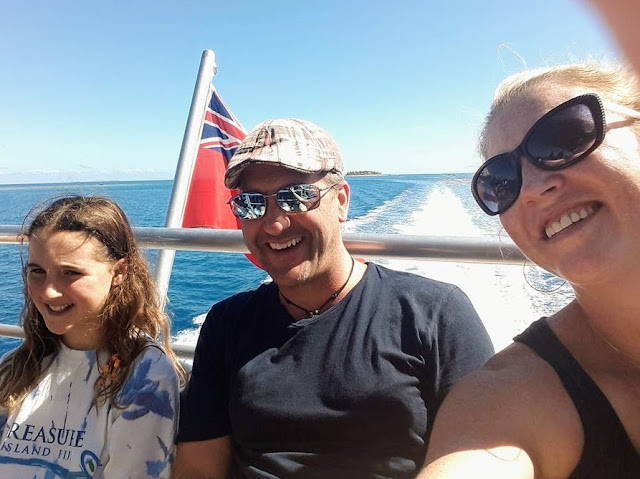
I took my jandals off as soon as we arrived on Treasure Island and went barefoot for the rest of the week.


Fiji, Tonga, Samoa, Tahiti, Bora Bora, Vanuatu ... names of places that conjure up images of tropical paradise in most North Americans' minds. In Australia and New Zealand, they are just places people go to on holiday. Last week, we went to Fiji ... along with seemingly every other Kiwi family on school holiday. Actually, almost everyone we met was from Australia, but I digress.

We started planning our tropical holiday at the last minute ... and by "last minute" I mean 7 months ago. We thought we were jumping the gun and getting ahead of the game. In the U.S. and Canada, there's just no point in trying to book rooms and airfares much more than about three months out. If you do, you pay a premium. Quite the opposite is true here. As we started looking for places to stay, we discovered that everything was booked, not just in Fiji but at every other South Pacific destination we considered. For sure, there were a few posh, adult-style resorts with openings, but anywhere even remotely interesting for a family was locked up. We would later learn that Kiwis and Aussies book their holidays as much as 10 months in advance.


I wish I could tell you about the South Pacific
the way it actually was.
The endless ocean. The infinite specks of coral we called islands.
Coconut palms nodding gracefully toward the ocean.
Reefs upon which waves broke into spray.
And inner lagoons, lovely beyond description.
- James A Michener, Tales of The South Pacific


After several weeks of trying to sort it out on her own, Kari finally relented and went to a travel agent (yes, they still have those here).  She managed to cobble together five nights at Treasure Island, then 2 nights on the Coral Coast. On TI, we had no telephone, no WiFi (internet access was available, but it's pretty limited). We would wake up and sit on the front porch of our bure, drinking coffee and watching the sun brighten the day. After getting Little H off to Kids Club (more on that later), we would sit on the beach for an hour reading our books. An hour was about all we could take ... by 11 am it was blazing hot. After lunch, we would do a little snorkeling, and then it was cocktail hour.


Sailboats and drinks at Vuda Marina while waiting for our boat to Treasure Island.


As you might have guessed from our previous posts, this was a total departure for us. Our typical holiday usually involves a list of things we would like to do. We use the list as a guideline rather than an agenda or a series of check boxes. More often than not, we don't get to everything on the list, but we are usually up and going for most of the day. This time, by design, we had a completely disconnected week. There was nothing to do but ... well, nothing. Treasure Island is small ... it took us less than 30 minutes to walk the entire length of its shoreline at a leisurely pace. It's just a hort boat ride off-shore and sits in the middle of a marine sanctuary. There is lots of beach and water time, tons of snorkeling, and plenty of hammock time.


Blue starfish (Linckia laevigata)


It was important to us to find a place that had some kind of organized program for kids. Little H travels well, but being stuck with us all the time probably gets a little old. That and I didn't want to hear the dreaded "I'm boooooored" all day long and be compelled to provide her with entertainment. Plus, as mentioned above, Kari and I planned on doing nothing for 5 days.

The Kids Club at Treasure Island Resort far exceeded our expectations. There were three sessions daily, and kids going to the evening session ate from a buffet before the main dining room opened so parents could enjoy a leisurely dinner while the kids were away. The list of activities was extensive. Each morning, they went out on a boat to feed fish in the marine sanctuary and then returned to the island to feed the turtles in the turtle rescue program. The rest of the morning program, and the afternoon and evening programs, consisted of various activities and games. Among other things, Little H got to clean the turtles (with a toothbrush!), hunted crabs (and fed them to the turtles), learned how to husk a coconut, braided floral crowns, made a shell necklace, and danced the limbo. All of this surrounded by a mix of kids from different cultures (but mostly Australians).


Little H and friends.


We've never had to worry about Little H talking to strangers. We have a running joke in our family ... my brothers, me, my nieces and nephews, none of us are very adept at meeting people and making small talk. Little H doesn't like to talk to people she doesn't know and our normally gregarious daughter tucks her head and becomes mute when put in situations where other people are unavoidable. She generally does very well traveling with me and Kari, but when I see her in a group of other kids, smiling, laughing, and playing, I see what she is missing when it's just the three of us. At Treasure Island, LH met a number of other kids and it was through her that we met their parents. Laughing, joking, and sharing our experiences with other parents made our week that much more enjoyable.

After 5 days on Treasure Island, it was time to head to the main island of Viti Levu. It was great sitting around doing nothing for 5 days, but our wander-lust and need for adventure prevailed. We were surprised out how much we enjoyed our "stay-cation" and have decided that future travels will include 2-3 days of just hanging out.


Goodbye, Treaure Island. We will likely meet again.


The oral tradition for the origin of the Fijian people is one of travel by canoe from Tanganyika in Africa, and this is what is taught in school there. Historians and other cultural scholars dispute this and claim the Fijian people and culture are more likely descended from the early Polynesians and Melanesians. What is not in dispute is that, even into the 1800's, Fijians practised cannibalism. This period is known as na gauna ni tevoro (time of the devil). While the Dutch explorer Abel Tasman visited Fiji in 1643, and James Cook landed there in 1774, the ferocity of the people deterred further European exploration and Fiji remained unknown to the rest of the world well into the 1800's. Throughout the South Pacific, the Fijians were feared and respected warriors. Our experience in Fiji couldn't have been more different. The people were warm, friendly, inviting, and proud of their culture.


Tui (Treasure Island Resort) shares the oral history of his ancestors.

We were invited to attend church services (conducted in Fijian) in the village of Namada. Tambua Sands, our home on Viti Levu was built on village land.


Our main purpose for staying on the Coral Coast of Viti Levu was so that we could meet up with friends from the U.S. who were in Fiji to visit family. Going from the slow, lazy pace of the Mamanuca Islands to the hustle, bustle, and traffic of Viti Levu was a little bit of a shock, even after only 5 days. Our Bure at Tambua Sands was set back from the beach and adjacent to the road ... the sound of traffic zooming by was actually a little jarring. It was only a short walk to the beach though, and the lagoon was perfect for snorkeling and exploring. Little H and I even got to play a little touch rugby and table tennis.


Beach-side bure, Tambua Sands.

Lagoon and reef flats, Tambua Sands.

Touch rugby, Tambua Sands.


... the rare sight of moonlight upon tropic waters
With palm trees along the shore and a ship at the dock.
The world was beautiful that night.
It was beautiful as only a tropic night on some distant shore
can be beautiful.
- James A Michener, Tales of The South Pacific


Treasure Island sunrise.

Treasure Island sunset.


Tambua Sands sunset.


Temperatures in Palmy when we left were 12-14 C ... cold, wet, and grey. We landed in Fiji to temperatures in the 30s with clear skies and a light tropical breeze. We spent time together as a family, and had a little time to ourselves. I averaged just over a book a day! We got a little sunshine in our souls and on our skin, and had a great visit with old friends while also making new ones. Our winter week in the tropics was just what the doctor ordered ...


Vinaka ...

13 May 2017

Signals


Well, I've traveled near and I've traveled far
I've been over Otira by car
Flown in an old NAC DC3
And recklessly traveled to Christchurch by sea
And got tossed out of a yacht, once, while sailing at sea
----------
But nothing intrigues me as much I must confess
As a trip on a typical Kiwi Express
- Rod Derrett Kiwi Express


TranzAlpine Journey - views from the outdoor observation car


We are starting to plan our return to the United States in September ... only 4 months away. Lately, I have been in a melancholy mood. It's dispiriting to think that this amazing journey is drawing to a close. Our explorations of this, our adopted country for the past year, have only scratched the surface; but the temperatures have dropped, the winds have steadily increased, and we are running short of time. While we have tried to keep our travels as inexpensive as possible, we have also splurged on some lux experiences, and have stretched our budget more than we had planned. Now is the winter of our [dis]content.

For our recent trip to Christchurch and the Banks Peninsula, we were joined by my mother who was visiting from Canada. It also happened to be her birthday weekend. She can't quite do the kind of trekking and tramping that we prefer, but she's good for a walk. It seemed the perfect opportunity to hop on the KiwiRail TranzAlpine Journey from Christchurch to Greymouth. Our first stop after landing in Christchurch, however, was to grab some lunch. Our bach was a 1.5 hour drive away on Banks Peninsula, so we headed into town for a feed and a ramble. Last week's post touched on this a little (Link: Moving Pictures) and I hinted at, but did not go into detail about the incredible destruction that surrounded us.


ChristChurch Cathedral with the Rendezvous Hotel partially obscured by scaffolding and the Central Library Project to the left. Slated for demolition, progress has halted pending resolution of lawsuits trying to preserve it.


As I was taking this photo of ChristChurch Cathedral, a man walked up and said "People complain about all the pigeons in there, but I like to think of them as angels." 


At 04:35 AM on 4 September 2010, Christchurch was rocked by an earthquake. Measuring 7.1 on the Richter scale, the Canterbury/Darfield quake was a strike-slip type (Link: 2016 Kaikoura Earthquake), involving 7 faults, and lasting 40 seconds. It was preceded by a 5.8 foreshock, and aftershocks continued for several months; the Christchurch quake (6.3) was one of these. Striking in the middle of the day (12:51 PM), on 22 February 2011, it was a relatively shallow quake at 5 km depth and was absolutely devastating. In total, one hundred eighty-five people were killed and structural damages have been estimated as high as NZD $40+ Billion.

According to a March 2017 article in The Press (Link: Cathedral Square: Where pigeons roost), it's been 6 years since the earthquakes and there have been no private property developments, office space has moved elsewhere, and hotels are now the most likely next step. Unfortunately, large-scale quakes (Mescalli VII "causing significant property damage and possible loss of life") are likely to occur in this region on average every 55 years. With that in mind, I can imagine lenders and developers would be reluctant to invest in this kind of infrastructure and tenants would be equally shy to occupy it.

As we wandered about town, scaffolding supported buildings everywhere and there were a number of city-block sized pits where buildings had been demolished. As of February 2015 (the most recent date for which I could find data), there had been 1240 building demolitions in Christchurch and only 292 rebuild permits.


Old Post Office Building

Central Library Project


We had a long drive out to Banks Peninsula along unfamiliar, curvy, and mountainous roads so had to cut our time in the city short. We stopped to get some more pics in front of the Christchurch Art Gallery before getting back on the road.


Quasi - Ronnie van Hout

On Looking into Chapman's Homer - Michael Parekowhai

Feet in The Air - Little H


South of ChCh is Banks Peninsula, a region made up of numerous harbours, bays, and coves all contained in two ancient shield volcanos. In 1770, Captain Cook named the area after the Endeavour's botanist, Joseph Banks. In 1830, a British brig captain became embroiled in local Maori politics resulting in one of the settlements being sacked and the people massacred. The British sent a permanent official British Resident to attempt to stop further atrocities. In 1838, a French whaler captain purchased land from the local Maori in hopes of forming a French colony on the Peninsula. By the time his colonists arrived in 1840, the Treaty of Waitangi had already been signed, granting the Crown sovereignty over all of New Zealand. Akaroa, the French settlement Port Louis-Philippe, persists to this day and retains much of its French flavour.

Our bach (Link: Akaroa Coastal Cottage) was perched on a cliff face about 4 km past town along a dark and winding road. It was a bit of a steep trek from the road down to the bach, but that separation from the road made it quite isolated and peaceful. We spent our mornings listening to birdsong and watching the bay come to life. In the evenings, we snuggled in a blanket, drank wine, and stared at the stars.


"Parking" was roadside on a ridge above and access to the bach involved a steep scramble down a dirt path.

  
We would have loved to have cooked on this old wood-burner stove but weren't allowed to use it. Modern appliances had been installed at some point.

Watching Orion dive behind the mountains across the bay was our nightly entertainment. 


The Maori settlement at Onuku, one of the signing sites for the Treaty of Waitangi, was a short walk from the bach, and Akaroa was about 4 km in the other direction. We made walks to both areas, picking among the rocks on the beach and eating/shopping in town.


Beach explorations - Onuku

Akaroa Harbour


While living in Hawaii, I worked at SeaLife Park, and then at the New England Aquarium when I was living in Boston. I have since tempered my enthusiasm for such places, and I can't stomach to think of the cruel lives led by animals at SeaWorld, and other "performance" oriented centres. I understand both sides of the argument, but I think I would prefer to know that these animals are wild and free. I am 100% opposed to canned captured animal encounters like those "swim with a dolphin" opportunities offered at resorts in Florida, Mexico, and the Caribbean. When Kari suggested we do a dolphin encounter out of Akaroa, I was understandably skeptical. Ecoseaker offers a boat ride out of the bay and into the swells of the Pacific ocean. They did a really good job keeping us entertained and informed on the way out, and provided yummy hot chocolate and biscuits to warm our bones on the ride back in. They have a fairly good idea of where dolphins will be, though they can't guarantee it, and assuming dolphins are around and they don't flee from the boat, customers don wetsuits and hop in the water. Maximum time allowed in the water with the dolphins is 45 minutes, and you aren't allowed to touch them. It was an interesting thing to do, but I don't feel the need to ever do it again. The Pacific Ocean off the coast of New Zealand's South Island in April is mind-numbingly cold even when wearing a 5mm wetsuit!

Hector's Dolphins (Cephalorhynchus hectori) are the world's smallest and rarest dolphin species and are endemic to New Zealand. One of the first things I noticed about them is the rounded dorsal fin. As it turns out, they are the only dolphin species with this feature. They live to be about 23 years old and females have their first calf between seven and nine years old. They calf only about once every 2-4 years, giving them a low potential for population growth.


The top photo is Grant's, the second is Kari's. The other two photos were taken by Adam with Ecoseaker.


The primary reason for our foray into the Canterbury region was to take the TranzAlpine train across the Southern Alps from ChCh to Greymouth. The train leaves at 8:15 AM, so it was an early morning start for us to get there on time from the wop-wops. Once on the train, we made ourselves at home, spreading out with coffee, reading material, and rousing games of Exploding Kitten. The train was incredibly comfortable. Seats were plush and huge panoramic windows coupled with skylights let in plenty of light and provided great viewing. 


Coffee and comfy seats to start our journey.

 Every seat had a great view.

  
Making ourselves at home.


The highlight of the train was the open-air viewing platform. No windows, so it was noisy, cold, and windy, but there was no glass to obstruct the view or reflect into camera lenses. Our second favourite spot on the train was the cafe/bar car. As usual, we didn't miss out on an opportunity to enjoy some of New Zealand's fermented grape juice. Taking photos from a shaking, moving train spewing exhaust and traveling at speeds approaching 100 kph was somewhat challenging. Worse still was the crowd on the way out. At one point, another passenger reached over my shoulder and put their camera in front of my face to get a shot. Another rested their camera on Kari's shoulder. Fortunately, at over four hours long and rather chilly through the high mountain passes, only the hardiest of us remained through the last half of the trip. On the ride back, I don't think there were ever more than 10 people back there.


Pic from the viewing car before it got chilly ... and crowded.

Viewing car empty while waiting at Arthur's Pass.

  
100 kph views.

This is absolutely one of my all-time favourite NZ pics. I won't reveal how many times I had to shoot to get one photo with a pole framed just right as we whizzed by.


Billed as "one of the most scenic train trips anywhere in the world" it was pretty amazing, but I would hesitate to call it "world class". It really was quite picturesque and Lady Luck smiled upon us once again, giving us beautiful weather and a nearly empty train. We had the viewing car almost to ourselves for long stretches of the journey. One mistake we made was to complete the entire journey in 1 day. 4+ hours from ChCh to Greymouth, an hour for lunch, then 4+ hours for the return journey made for a really long day. My advice, for anyone who asks, would be to spend the afternoon and evening in and around Greymouth, then return the next day.

We are starting to put together an itinerary for our return trip to the U.S. Rather than taking the typical eastward route, we are going to fly to Tokyo for a weekend, then westward on to Amsterdam. We will spend a week traveling through Europe by train, finishing in Paris. We're meeting family and friends for a few days in Scotland, then making the final jump across the pond to NYC. That does not mean that the good times in NZ are over. Far from it. On my birthday weekend, I am again tackling the Tongariro Crossing, this time a guys' weekend with friends. In July, anticipating a cold and dreary winter, we have made plans to spend a week in Fiji. 


Tickets, please!